What is a clipping agency?
A clipping agency turns your long videos, such as podcasts, streams, interviews or demos, into short vertical clips and has a network of clippers post them on their own TikTok, Instagram Reels, YouTube Shorts and X accounts. You pay for verified views, usually $1 to $3 per 1,000 all-in, or a monthly fee plus the view budget (Bloomberg reported $2,500 to $10,000 a month at Clipping), and the agency recruits the clippers, checks the clips and pays them.
How much does a clipping agency cost?
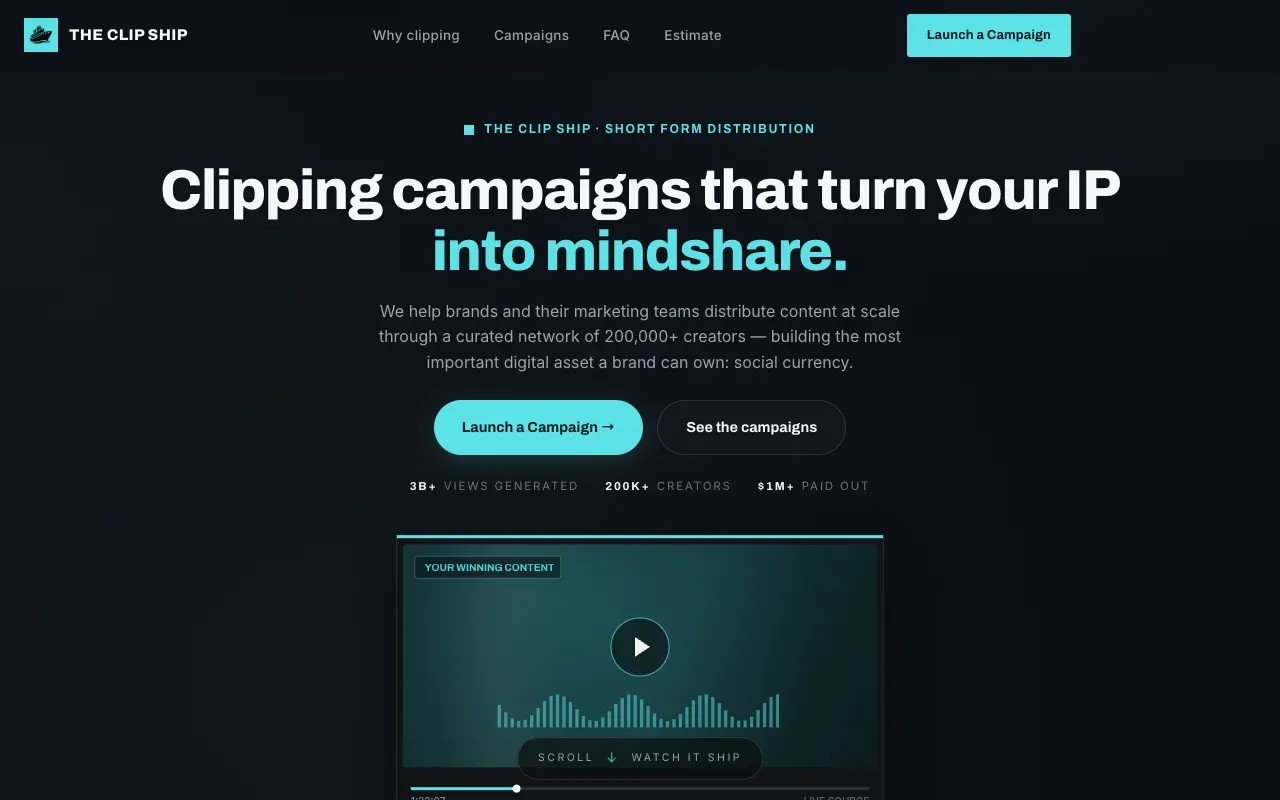
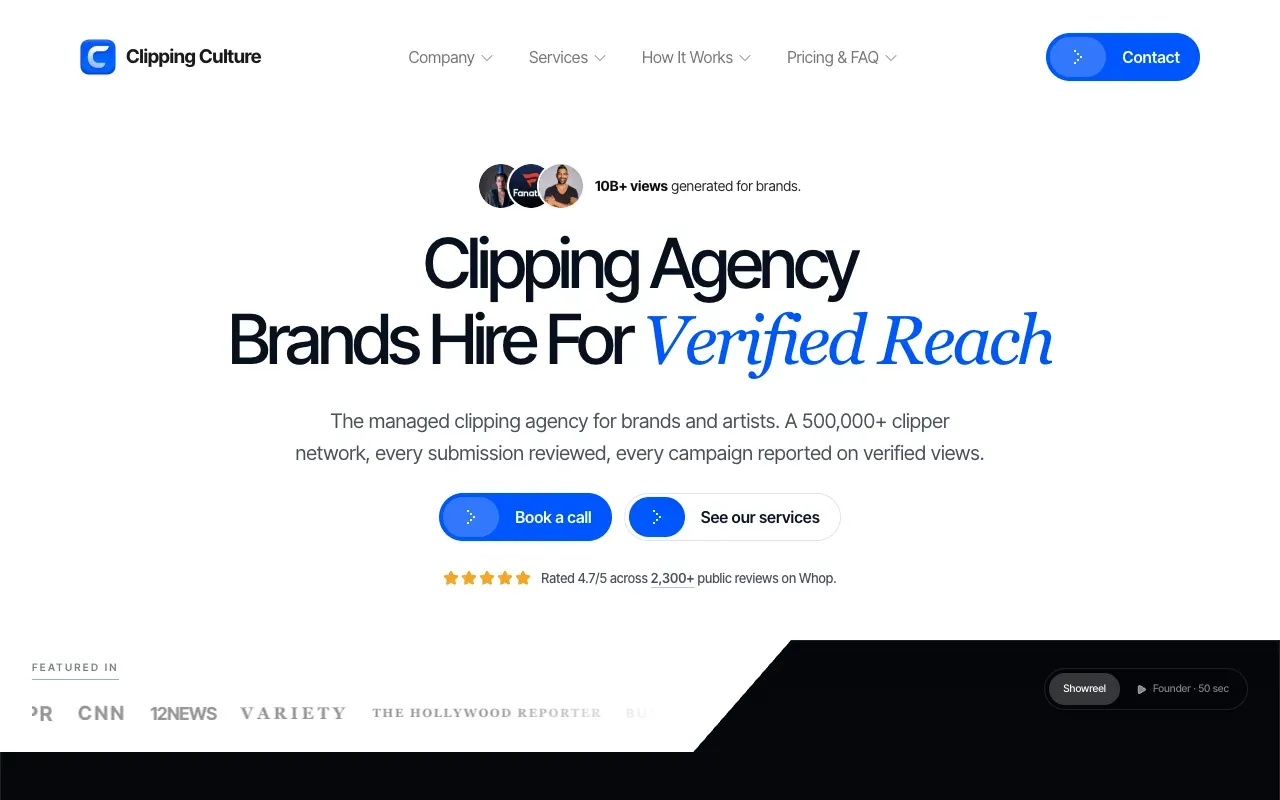
Most managed agencies quote one all-in rate per 1,000 verified views: about $1 at The Clip Ship, about $1.50 at Clipping Culture and $3 at Atomik Growth. Minimums run from $5,000 (Lumina Clippers, Clip Influence) to $15,000 (Clipping Culture) and a $30,000 trial at Atomik Growth. Self-serve platforms start at a $1,000 budget, and Content Rewards takes 10% of what clippers earn from it (8% once verified).
How do clipping agencies track views and pay clippers?
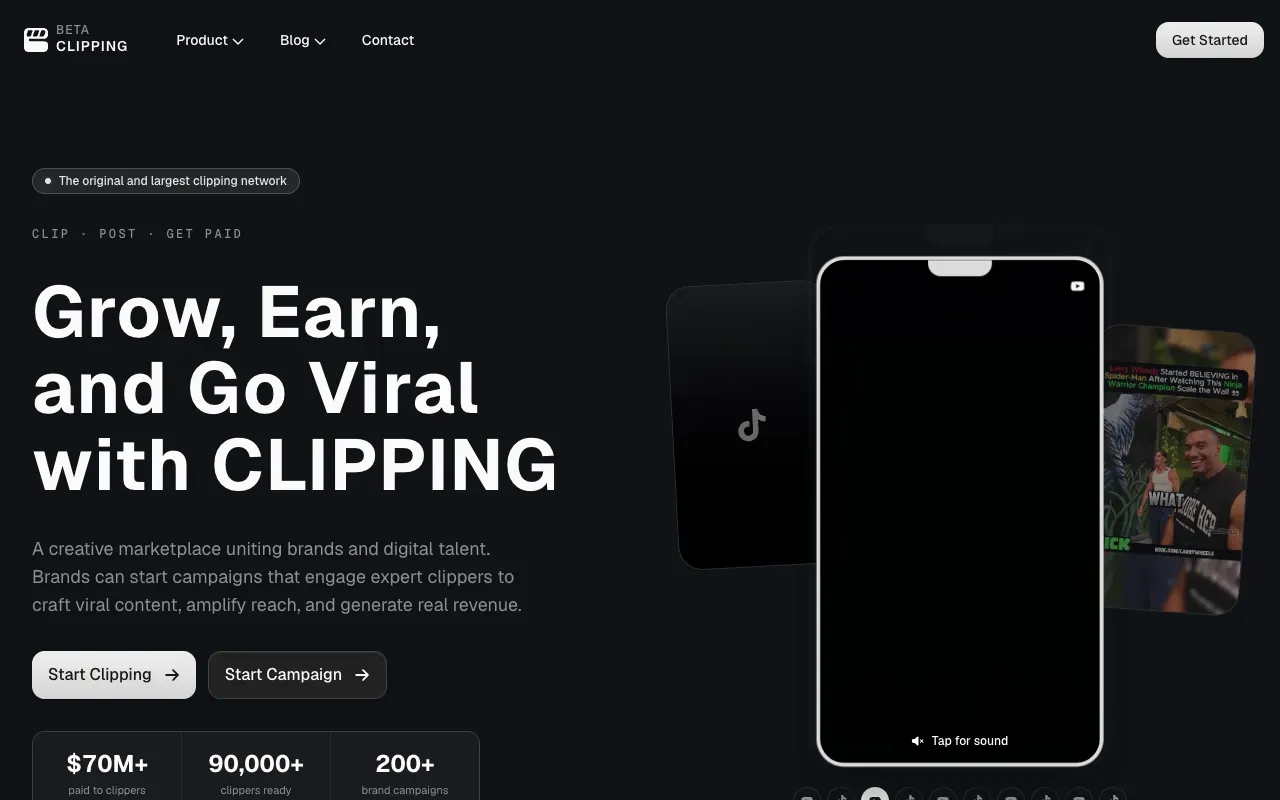
Clippers connect or submit their accounts, and views are read from TikTok, Instagram, YouTube and X on a schedule (every 12 hours at Clipping). A clip earns once it passes a minimum (1,000 views at Clipping, 5,000 at Vyro), for a set window (7 days after approval on Content Rewards), up to a cap (up to $1,000 per clip at Vyro, each brief sets its own). Flagged views are removed, and clippers are paid when the cycle closes, by PayPal, crypto, Stripe or bank transfer.
What is the difference between a clipping agency and a clipping platform?
On a platform such as Content Rewards or Vyro you write the brief, set the rate and approve every clip yourself, and anyone can join; you pay for views, and the platform takes a fee. An agency does all of that with its own clippers and charges an all-in rate per 1,000 views, or a fee on top of the view budget.
Do clipping campaigns work for brands?
They buy reach cheaply: agency case studies that publish their spend come in at $0.16 to $1.19 per 1,000 views (The Clip Ship, ClipUp). Footage with fans, such as music, streamers and podcasts, gets clipped fastest. A new product has to pay more: NPR found an AI startup offering $25 per 1,000 views. Judge a campaign on sign-ups or sales in the weeks it runs, not on views alone: Cluely's CEO wrote that one UGC video got 49 million views and fewer than 100 downloads.
Can I just track clips and calculate payouts for clippers I already have?
Yes. Add each clipper's public accounts to viral.app, set the rate, cap, minimum and view window as campaign rules, and it calculates every clipper's pay per period from the tracked views. Pay through viral.app's integrated payout system for 3%, or pay any way you like (Whop, PayPal, your bank) and mark the payout as paid, which carries no fee; the breakdown then exports as a CSV. Two things to set up: a hashtag or tag rule, so only clips for your brand get priced when a clipper posts for several brands, and enough tracked videos on your plan (1,000 on Pro, 5,000 on Ultra, 20,000 on Scale). X, Twitch and Kick clips aren't tracked. Clippers hired on viral.app's marketplace are always paid through the payout system.
Can I run clipping in-house instead of hiring an agency?
Yes. Recruit clippers who already post clips in your niche, track their accounts and pay per 1,000 views with a cap per clip. viral.app does the tracking and payouts from $99 a month plus 3% per payout. The anonymous calling app Zestr built a network of clip accounts past 49M views from 3,183 videos by recording raw material itself and sending batches to clippers with hook rules (Social Growth Engineers, January 2026).
How much do clippers get paid?
About $1 per 1,000 views is normal. Content Rewards says $1 is its most common setting, Vyro's live campaigns paid $1 to $2.50, Clipping Culture says $0.10 to $4 depending on the campaign, and the median in open pay-per-view jobs on viral.app is $1.
Is Whop clipping legit?
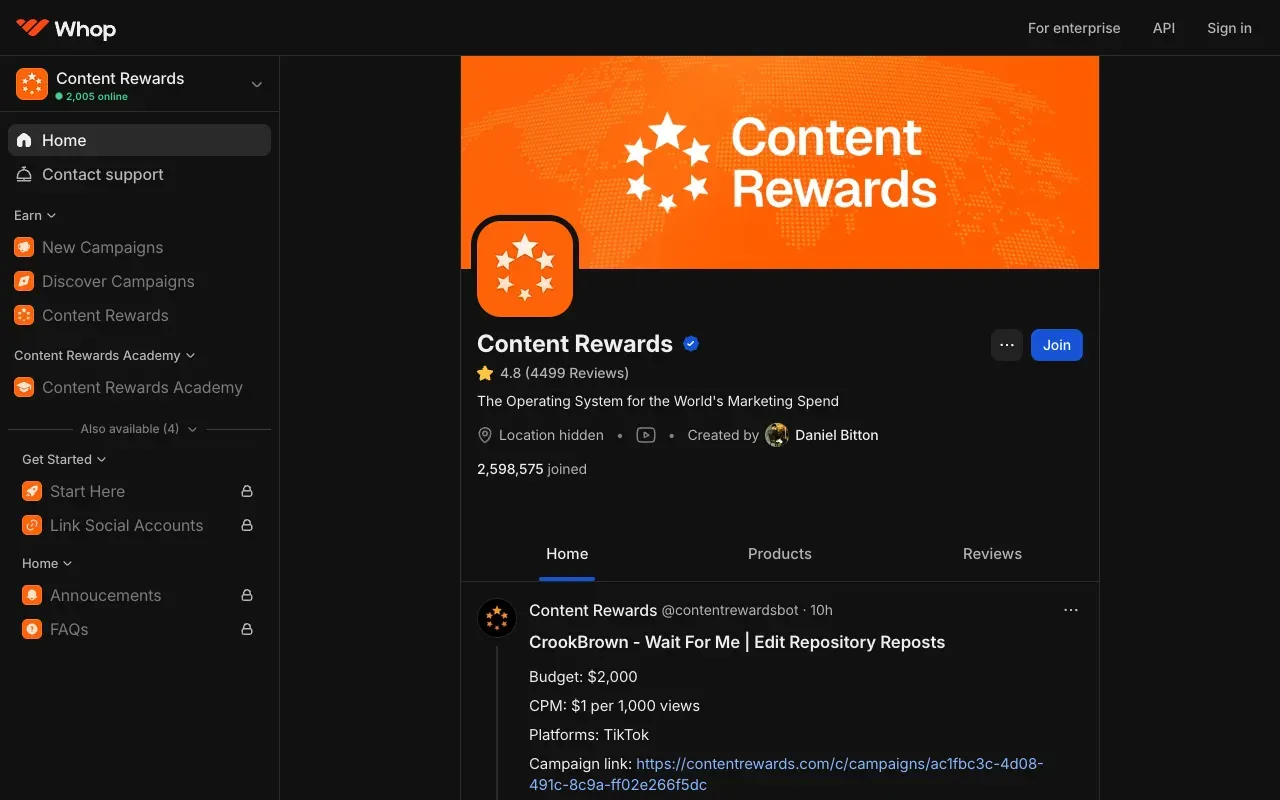
Yes, the campaigns pay real money: Content Rewards' Whop store has 2.6M members, and campaigns there on October 18, 2026 included Tony Hawk at $1.25 per 1,000 views. Clippers are paid only for approved clips, and Content Rewards keeps 10% of their CPM earnings.
How do I start a clipping agency?
Many new agencies run their first campaigns on a marketplace such as Content Rewards (ClipUp still does), recruit clippers through Whop or Discord, and charge clients a fee or an all-in rate on top of what clippers earn. To own the roster and the payouts, run it on tracking and payout software: viral.app's Scale plan covers 500 creators across client campaigns for $499 a month (plans).
What is the difference between clipping and UGC?
Clippers re-cut footage that already exists and post it on their own accounts. UGC creators film new videos about a product, for the brand's accounts, their own or ads. If you have no long footage to clip, compare UGC agencies instead.
 clipping-agencies.com